
What We're Looking For in an Egg Donor
The non-negotiables, the wish list, and everything in between

In our first consult with the Utah Fertility Center, Dr. Conway asked the question so casually you’d think she was asking what we wanted for lunch.
“So, how many kids do you hope to have?”
Ryan and I both paused to looked at each other…
Here’s the thing about that question: neither of us has ever actually had a kid. We don’t know what it’s like to be exhausted at 3am with a newborn, or what it feels like when your baby finally calls you Dad for the first time, or how having one kid might change what feels right for the next one. Most people get to find that out as they go. But we have to map out our entire family before experiencing any of it.
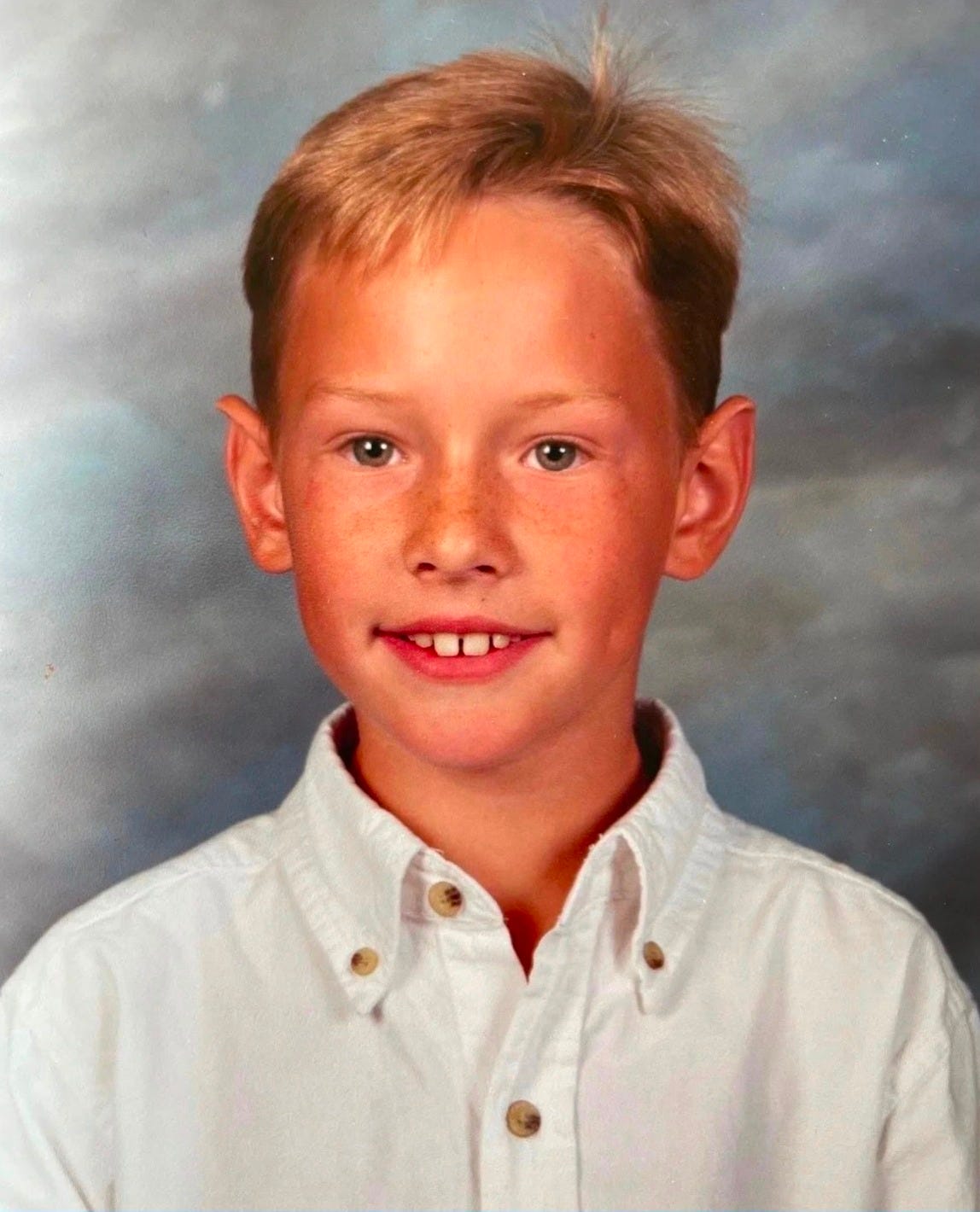
Ryan as a kid
We talked it through right there in the room. We both felt certain about wanting two kids. But we also found ourselves hoping for the option to have up to four, if things go well. Are we crazy?? Maybe…
Well anyway, Dr. Conway nodded, made a note, and then casually dropped a number that made me sit up a little.
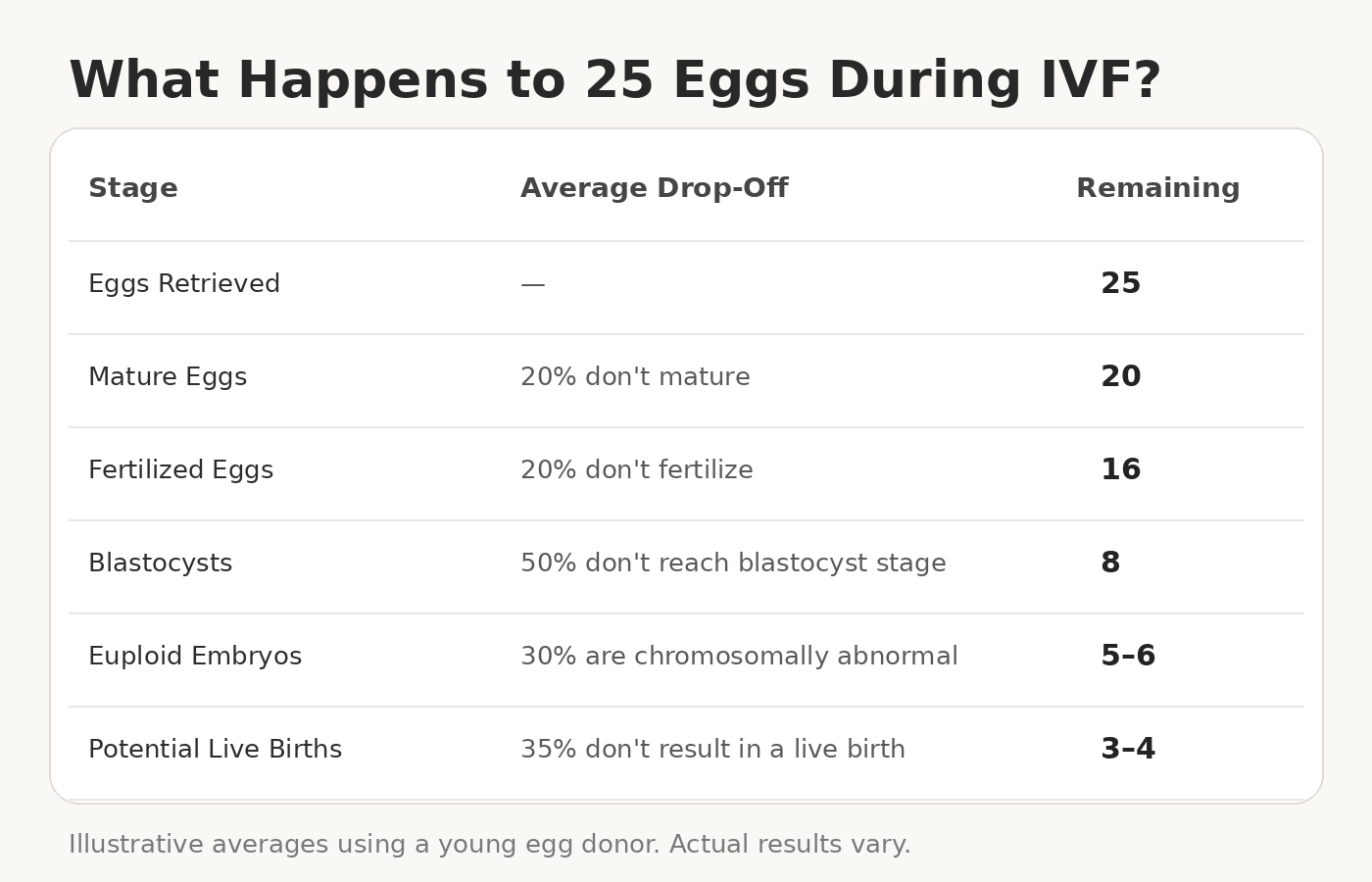
“To have a real shot at four, you’re going to need somewhere around 25 to 30 eggs.”
I’m sorry. THIRTY?
That number made more sense once we understood how IVF actually works.
There’s drop-off at each step, which is why we need a strong number of eggs from the start if we want a real shot at multiple healthy embryos.
What I Expected vs. What Actually Mattered First
When people picture searching for an egg donor, they usually picture looks, personality, background. What will she be like? Will she feel like a fit?
Those questions matter. But but before we get to the fun part, there are less glamorous considerations that have to come first…
We want to use the same donor for all of our kids so they’re biological siblings, so the first thing we actually have to consider is ovarian reserve. If you read my previous post about egg donation you already know that AMH and AFC are the two indicators that matter most. Dr. Conway told us we should look for a donor with an AFC of about 25 and an AMH around 3.5 or higher.
Of course, if we fall in love with a donor whose reserve is lower than we’d hoped, a second round is always an option. But that means asking her to go through weeks of injections and another procedure all over again, and it means we’d have to take on the financial cost of two full cycles instead of one.
Something That Surprised Me: We’re Leaning Toward Someone Who’s Done This Before
Going in, I assumed we’d want a first-time donor, but that instinct soon shifted. A donor who has already gone through a retrieval gives the clinic real information about how her body responded to medication, how many eggs she produced, how healthy those eggs were, and how she handled it physically and emotionally. With a first-time donor, every one of those is still a question mark.
Proven donors also tend to set higher compensation rates, and at first that gave us pause. But the more we thought about it, the more we realized it’s a cost we’re genuinely willing to take on. There is already so much uncertainty built into this entire process. If a proven donor can remove even a little of it, that feels worth paying for.
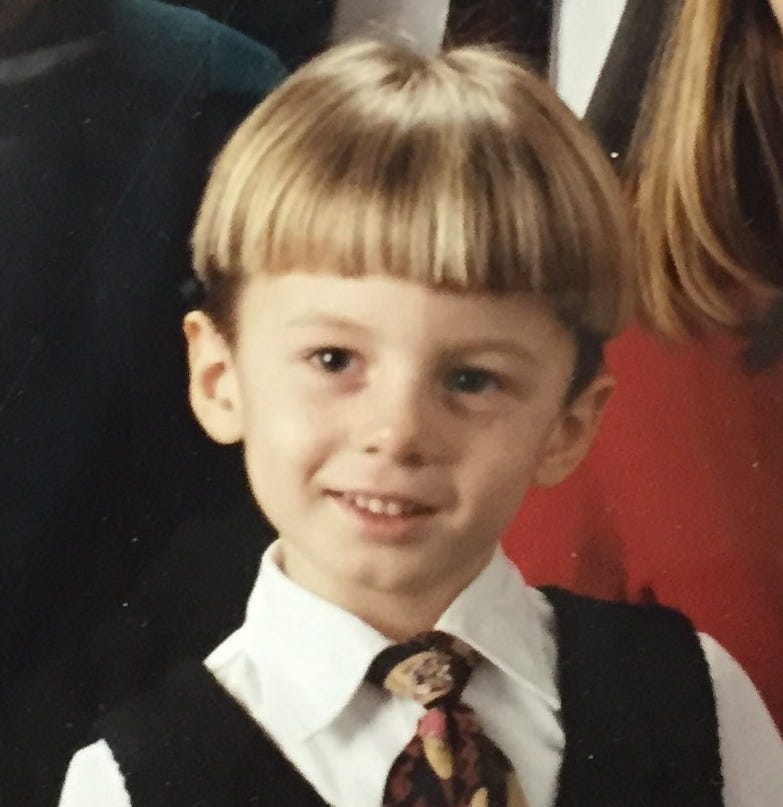
Me as a kid
Interesting side note: I had originally assumed agencies were setting compensation based on a donor’s genetics or background, and that felt strange to me, like they were putting a price tag on a person’s worth. But it turns out, donors aren’t compensated for their eggs. They’re compensated for everything the retrieval process puts them through, and they set their own rates. In practice, that’s meant seeing figures anywhere from around $5,000 to upward of $50,000. A donor decides what would make the process worth it to her, which is part of why donors who are especially in demand or have a strong track record tend to set higher compensation rates for themselves.
Next Up: Health History
Once ovarian reserve is accounted for, the next thing we’ll look through is personal and family medical history. Things like history of cancer, heart disease, mental illness, and genetic conditions across multiple generations. Clinics screen for a lot of this already, but we’re also looking for patterns ourselves, because we want to give our kids the healthiest possible start and feel confident in that decision for years to come.
The Part I Get Most Excited About
And now for the fun stuff!
We want our kids to look at us and feel like they fully belong, to see themselves in our faces the same way we see ourselves in our own parents. Ryan and I both have curly hair and green eyes, so I’ll admit I already get a little giddy every time I see a profile photo with a matching head of curls. Beyond that, I’m tall with brown hair and I’ve got more moles than I can count. Ryan is blonde and burns easily and has a wide smile. Small things, but we’re keeping an eye out for a donor whose overall phenotype, coloring, build, those small physical details, could believably blend into our family photos one day.
We’re also paying attention to personality and interests, hoping for someone academically inclined, maybe musical or artistic, ideally extroverted and a little adventurous, because that’s so deeply who we are as a couple. I have Scandinavian roots, Ryan has Greek, so a similar ethnic background would be a meaningful bonus if we find it.
There’s one more thing on our list that matters to us for the same reason.
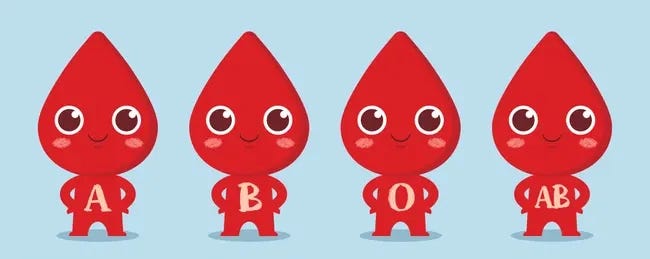
I remember sitting in a high school biology class doing one of those finger-prick blood tests and finding out I share the exact same blood type as my mom. It was such a small detail, but it made me feel tied to her in this specific, almost secret way. We’re hoping to find a donor who matches our blood type, because we want that same quiet, tangible connection for our kids.
Let the Search Begin!
So that’s the picture. Strong ovarian reserve, ideally a proven donor, solid health history, and if we’re lucky, curly hair, green eyes, and a personality that feels like it was made for our family.
This is the moment everything stops being theoretical. We’re not just talking about having kids anymore. We’re actively looking for the amazing woman who’s going to help make it happen!
Make sure to subscribe, because next time, I’ll take you inside what it’s actually been like scrolling through donor profiles, what a clinic database shows you versus what an agency shows you, what’s surprised us, and what it felt like the first time a profile actually stopped us in our tracks.
Catch you soon!
Hi Charlie and Ryan! I sent you a DM on instagram regarding your latest story! I’m a birth mom and would love to chat soon about being considered. Thanks!!
Hi! I’d love to chat with you sometime. Dr. Conway helped me get pregnant with my daughter, and she also guided me through my surrogate pregnancy. I feel like I learned a lot through both experiences and may have some insights that could be helpful for you and your husband as you navigate this process. If you’d ever like to connect, I’d be happy to chat!